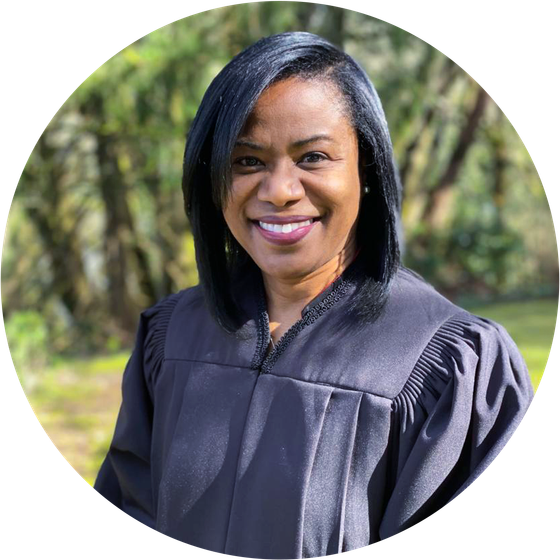
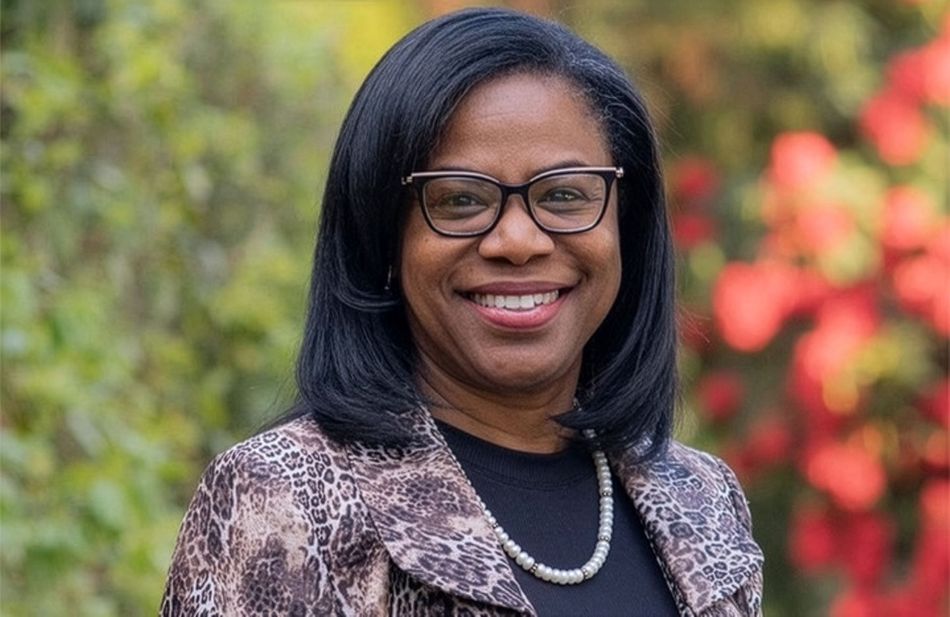
Sharonda Amamilo has spent her career in places most people never see: public defense offices, military intelligence units, family courts. Places where the most difficult decisions have to be made.
She knows how difficult the legal system is to navigate, and what it costs people when it fails them.
Before the bench, Sharonda spent twelve years at the Thurston County Office of Public Defense, representing adults and children in criminal, juvenile, and dependency matters.
She has seen firsthand what happens when someone walks into a courtroom with no idea what they're up against. She also served over 25 years in U.S. Army military intelligence, retiring as a Chief Warrant Officer. Her work there as an Intelligence Oversight Officer required precise written analysis under pressure.
Today, Judge Amamilo serves on the Thurston County Superior Court, where voters elected her in 2020, making her the first person of color to hold this seat. Her docket has run from felony trials and complex civil disputes to dependency hearings and family law. As a Judge Pro Tempore on the Washington Court of Appeals, she also handles full record review and appellate deliberation alongside her Superior Court duties.
Sharonda has called Washington home since 1992. She and her husband of 28 years raised seven children here, and they now have six grandchildren. She earned her B.S. from Southern Illinois University, her MBA from Saint Martin's College, and her J.D. from Seattle University School of Law.